Understanding the cost factors for 3 to 5 meter banners is crucial for businesses and event organizers looking to maximize their marketing budgets. These large-format banners are often used for outdoor advertising, trade shows, building wraps, and special events. The price of producing such banners can vary widely based on factors like material type, printing quality, finishing options, quantity, design complexity, turnaround time, and location. By breaking down these elements, you can better plan your investment and avoid unexpected expenses while ensuring the final product meets your visual and durability needs.
- The primary drivers of cost for 3 to 5 meter banners begin with the choice of material. Vinyl remains the most common due to its balance of durability, weather resistance, and affordability, while mesh banners are ideal for windy locations as they allow air to pass through, reducing strain on mounting points. Fabric banners, though typically more expensive, provide a premium, wrinkle-resistant appearance suited to indoor events and high-end branding. Furthermore, printing quality impacts pricing: standard resolution suffices for simple text and graphics viewed from a distance, whereas high-resolution printing is necessary for detailed images, increasing ink usage and print time.
- In addition, finishing options such as hems, grommets, pole pockets, and lamination add to the final cost but significantly improve usability and lifespan. Ordering in bulk can lower the per-unit price, which is beneficial for campaign rollouts or multi-location branding. However, complex custom designs may require extra design time and proofing, and urgent turnaround requests often incur rush fees. Regional differences and the choice between local and online printers also play a role, as local suppliers may charge more but offer personalized service and faster resolution of issues.
- Material selection is one of the most significant factors affecting the cost of 3 to 5 meter banners. PVC vinyl, typically in weights like 440gsm or 510gsm, is widely used for outdoor banners because of its strength, UV resistance, and cost-effectiveness. Thicker vinyl or blockout vinyl, which prevents light from shining through, costs more but is valuable for double-sided prints or high-sunlight environments. Mesh materials, designed with tiny holes to reduce wind load, are often priced slightly higher than standard vinyl but can save money in the long term by reducing the risk of damage in exposed locations.
- Fabric banners, often made from polyester, command a higher price point due to their premium look and dye-sublimation printing process, which yields rich colors and a soft finish. These are particularly popular for indoor backdrops, stage branding, or retail environments where visual quality is paramount. Eco-friendly materials such as PVC-free banners or recycled fabrics can also impact pricing; while generally more expensive, they align with sustainability goals and can enhance brand perception. Understanding these trade-offs helps banner artists and buyers choose the right substrate for both budget and performance.
- Printing technology and quality are central to banner pricing. Large-format printers use either solvent, eco-solvent, latex, or UV-curable inks, each with different costs and durability characteristics. Standard print modes, typically 360–600 dpi effective resolution for outdoor viewing distances, require less ink and time, keeping costs down. However, when banners are intended for closer viewing, such as at trade shows or indoor events, higher resolutions—up to 1000 dpi or more—are preferred, increasing print time and ink consumption.
- Color coverage and saturation also influence price. Designs with large areas of solid color or photographic imagery use more ink than simple, text-based layouts, marginally increasing costs. Furthermore, accurate color matching, such as reproducing Pantone-specific brand colors, may require test prints and additional setup time. Some printers charge extra for white ink on colored or transparent materials, which is particularly relevant for specialty installations. By working closely with a professional banner artist or print provider, you can balance visual impact with budget, choosing print settings that are appropriate for how and where the banner will be viewed.
Finishing Options and Installation Requirements
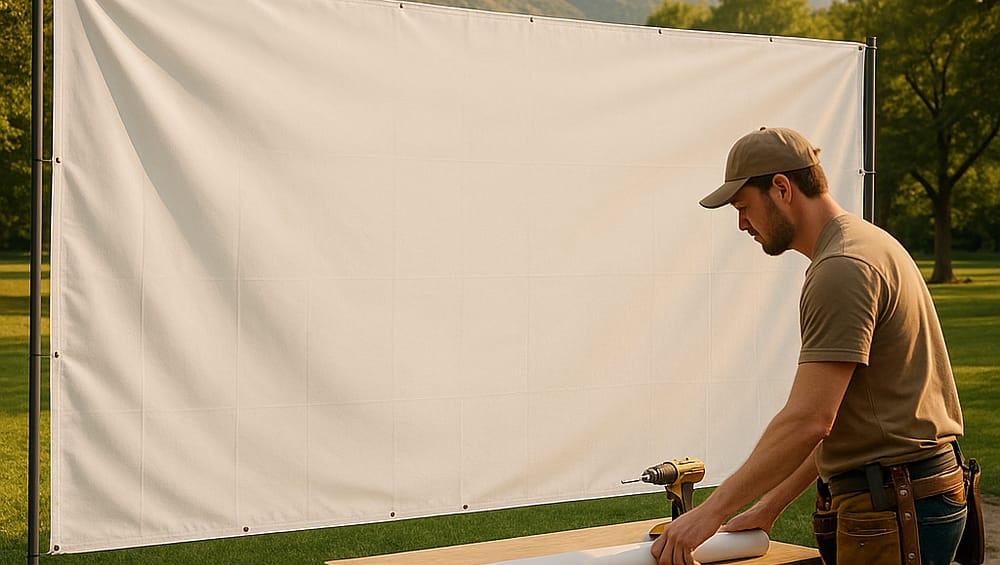
Finishing and installation considerations are often overlooked but can significantly affect the total cost of 3 to 5 meter banners. Standard finishing typically includes hems reinforced with welding or stitching and metal grommets at regular intervals, which distribute tension and make installation easier. Additional options like reinforced corners, webbing, or edge reinforcements increase durability for long-term outdoor use but add to the price.
For banners that will hang from poles, trusses, or stage rigs, pole pockets are a common option, allowing rods to slide through the top and/or bottom. This gives a clean, taut appearance ideal for events and retail displays. Wind slits may be cut into solid vinyl banners for outdoor installations, although mesh banners are usually preferred for very windy areas. Installational needs—such as using scaffolding, lifts, or professional rigging—can also introduce substantial labor costs, especially for higher placements on buildings or large venues. Planning the mounting method with your print provider early helps ensure the banner is finished correctly and that you have a realistic total project budget.