How WaveLight Air Towers Are Transforming Event Experiences in the US Market
WaveLight Air Towers are rapidly emerging as a standout choice for brands and organisers seeking to elevate the visual appeal and functional impact of events in the US market. These inflatable, LED-lit towers combine portability, ease of use, and high-impact illumination to create immersive environments that align with the broader shift towards experiential and event marketing. As spending on such immersive experiences continues to grow across sectors, marketers are under pressure to deliver installations that are not only visually striking but also efficient, reusable, and measurable in terms of returns. WaveLight Air Towers sit squarely at this intersection of creativity and practicality, offering an eye-catching alternative to traditional flat banners and static signage.
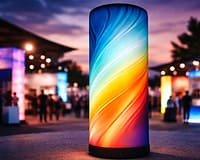
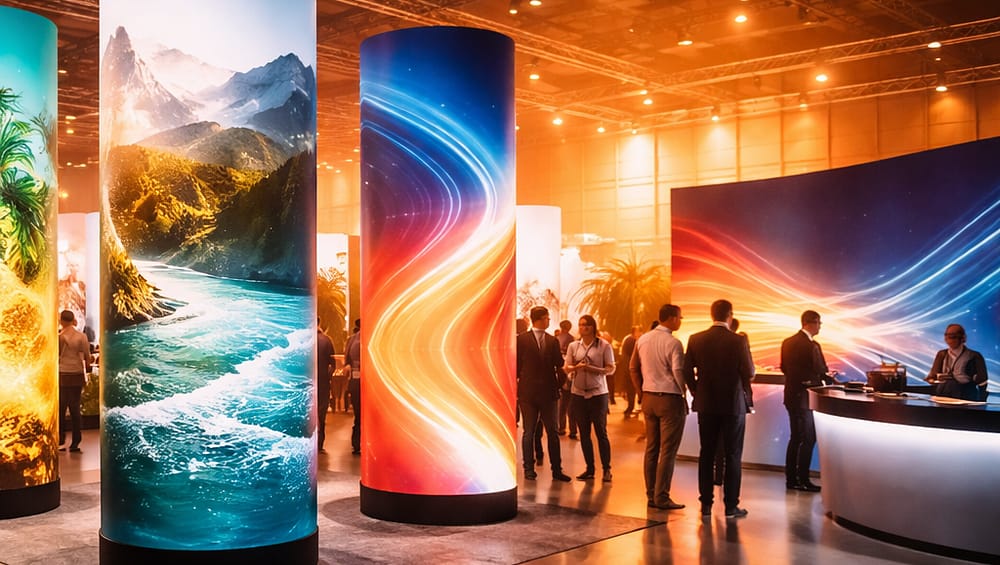
At their core, WaveLight Air Towers are lightweight inflatable structures powered by internal fans and fitted with energy-efficient LEDs. Once plugged in, they inflate within minutes, and the internal lighting system can be tuned to different colours, gradients, or programmed sequences, enabling brands to match event themes or corporate palettes with precision. The exterior fabric can be fully customised with high-resolution graphics, logos, and messaging, turning each tower into a tall, illuminated canvas visible from multiple angles and over long distances on a crowded show floor. Compared with conventional printed banners that rely on ambient lighting and face mounting limitations, these vertical beacons stand out in cluttered venues, drawing the eye upwards and acting as a natural wayfinding cue for visitors.
Their appeal extends far beyond aesthetics. Industry data increasingly points to the superior performance of illuminated vertical signage in driving booth visibility and footfall. Exhibitors report that tall, glowing structures are more likely to break through visual noise than wall-mounted prints or low-level décor. Furthermore, LED-lit inflatables tap into the broader trend towards sustainable, reconfigurable infrastructure: they use relatively low power, can be deployed repeatedly across different venues, and pack down into compact cases for transport. For agencies managing multiple events across cities, this translates into lower logistics costs and faster turnaround times on site. Whether used at trade shows, corporate conferences, product launches, festivals, or pop-up activations, WaveLight Air Towers function as both branding tools and environmental design elements, helping to define zones, set the mood, and keep audiences engaged.
- High-visibility illuminated branding that stands out above crowded trade show floors and festival grounds
- Fast, tool-free installation and deflation, allowing small teams to set up large-format visual elements in minutes
- Customisable graphics and LED colour schemes to match brand guidelines or event themes with precision
- Reusability and portability, reducing long-term production and shipping costs for agencies and exhibitors
- Durable construction suitable for both indoor and controlled outdoor environments, with stable bases and quality fabrics
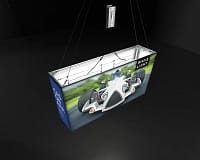
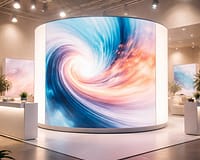
From a broader event marketing perspective, WaveLight Air Towers sit alongside inflatable backlit towers, inflatable signage, and inflatable backlit banners as part of a modular toolkit for building immersive spaces. In practical terms, they give organisers the flexibility to design vertical layers of communication: the towers rise above the crowd to signal presence, while backlit banners and horizontal pieces carry detailed messaging at eye level. This layered approach mirrors best practices seen at leading international exhibitions, where brands are investing more in depth, movement, and sensory cues rather than static, one-dimensional displays. For Indian marketers observing trends in the US and seeking inspiration, these formats offer a preview of how portable illuminated structures can reshape visitor journeys and on-ground brand storytelling.
Functionally, the towers are designed to be intuitive for on-site teams. The base typically houses a quiet fan and power connection; once activated, the structure achieves full height quickly, and internal LED strips or modules provide even, diffused illumination. Thanks to LED technology, power consumption remains relatively low even when towers are kept on for long durations, such as during day-long conferences or multi-day exhibitions. Many suppliers now offer remote or app-based control systems, letting staff adjust brightness and colour in real time to sync with live performances, presentations, or changes in ambient lighting. This dynamism is particularly valuable at music festivals, product launches, and evening receptions, where lighting shifts can transform the atmosphere within seconds.
In terms of deployment, strategists are increasingly using WaveLight Air Towers to anchor key touchpoints: entrances, registration counters, product demo zones, lounges, and photo-op backdrops. Their height ensures they can serve as orientation markers, guiding guests naturally through the space. At trade shows, exhibitors note that illuminated towers not only attract traffic but also help attendees relocate the booth after initial contact, supporting repeat engagement across the event cycle. Combined with QR codes, NFC tags, or simple call-to-action panels printed on the fabric, they can be integrated into lead-generation workflows. When assessed through an ROI lens, the ability to reuse printed sleeves across campaigns, repurpose structures for different events, and measure incremental footfall and dwell time strengthens the case for investment in inflatable signage and backlit solutions.
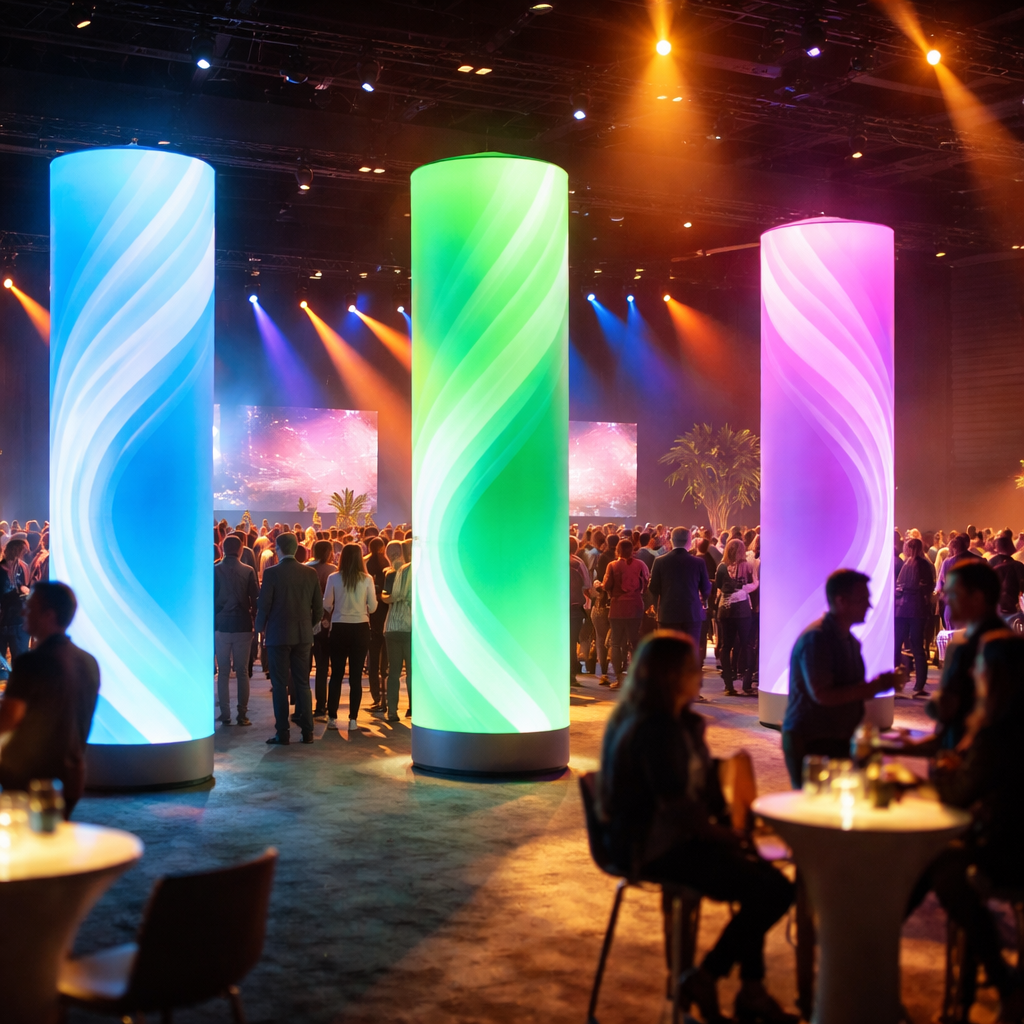
Designing effective WaveLight Air Towers and related inflatable backlit signage requires a balance between bold aesthetics and clear communication. Since these towers are often viewed from a distance or while attendees are in motion, the most successful executions prioritise high-contrast graphics, minimal but impactful text, and distinctive brand identifiers such as logos and colours that can be recognised instantly. Complex imagery or fine details tend to get lost under event lighting conditions, especially against competing visual stimuli. Instead, marketers are advised to think of the towers as vertical beacons rather than information-heavy posters. In practice, this means using large logos, short taglines, and simple graphic motifs that remain legible from across the venue. For events that run both day and night, it is also crucial to test how colours appear under different lighting modes, as certain combinations may shift or lose vibrancy once the internal LEDs are activated.
Another design consideration involves the coordination between towers, inflatable backlit banners, and other décor elements. When these pieces are treated as part of a unified system instead of stand-alone units, the overall environment feels more coherent and premium. For example, a brand might use tall WaveLight Air Towers at entry points to establish presence, then rely on backlit banners along aisles to communicate product benefits, and finally use smaller inflatable signage inside booths for calls to action or offers. This hierarchical structure mirrors editorial design principles, where headlines, subheads, and body copy work together to guide the reader. In an event context, the towers play the role of headlines—drawing attention first—while other illuminated pieces deepen the narrative and drive specific behaviours such as scanning a code, trying a product demo, or registering for a service.
From an ROI standpoint, evaluating the impact of investing in these structures goes beyond aesthetic satisfaction. Event teams are increasingly tracking metrics such as incremental booth visits compared to previous editions, average dwell time within the branded zone, and the volume of qualified leads or sign-ups generated near the towers. Since the hardware is designed for repeated use, the initial capital expense can be amortised over multiple events, making cost-per-impression significantly lower than one-off printed builds or complex custom stands. Additionally, the portability of inflatable systems reduces the need for heavy rigging and specialised installation crews, enabling leaner operations across cities. In the long run, this combination of measurable engagement uplift, operational efficiency, and brand consistency positions WaveLight Air Towers, inflatable backlit towers, and related signage as strategic assets in a modern event marketing toolkit.
Illuminated inflatable signage is no longer a novelty; it is fast becoming a core component of serious event marketing strategies, with WaveLight Air Towers demonstrating how light, height, and mobility can converge to deliver standout brand visibility and measurable engagement.
The growing interest in WaveLight Air Towers and similar inflatable backlit solutions reflects a larger shift in how brands are thinking about space, storytelling, and technology at events. Instead of treating signage as an afterthought or purely functional requirement, marketers are using illuminated towers as active participants in the experience design. These structures help define the rhythm of an event: they can signal key programme moments when their colours change, highlight sponsor zones with distinct lighting schemes, or turn otherwise neutral corridors into visually engaging pathways. As experiential budgets rise in the US and brands look for formats that justify investment through reuse and analytics, the case for inflatable signage strengthens. Importantly, the technology behind these towers—efficient fans, durable fabrics, and low-consumption LEDs—makes them accessible to a wide spectrum of organisers, from large corporates and exhibition centres to smaller agencies looking to punch above their weight in visual impact.
Looking ahead, the integration of WaveLight Air Towers with digital and interactive layers is likely to deepen. Already, some deployments combine illuminated towers with projection mapping, sensor-based lighting cues, or companion mobile experiences that respond to proximity. In such scenarios, the tower becomes not just a static brand marker but a responsive interface within the event ecosystem. For Indian event professionals tracking US trends for local adaptation, these developments suggest a future where inflatable backlit towers and banners could seamlessly connect with data dashboards, helping teams understand movement patterns, engagement hotspots, and content performance in real time. Even without advanced integrations, the fundamentals remain compelling: rapid setup, strong visual recall, and flexibility across indoor and outdoor venues.
Ultimately, the success of WaveLight Air Towers and related inflatable backlit signage rests on a simple proposition: they make brands harder to miss. In crowded, distraction-heavy environments where attention is the most valuable currency, tall illuminated structures offer a practical, repeatable way to command that attention while preserving agility and cost control. When combined with thoughtful design, clear messaging, and a disciplined approach to measuring outcomes—from footfall to leads to social media amplification—these inflatable towers can play a central role in modern event marketing strategies, both in the US and in markets like India that are closely watching and selectively adopting global best practices.