How to Leverage WaveLight® Casonara for Maximum Brand Exposure
WaveLight® Casonara Lightbox is a cutting-edge illuminated display system that empowers brands to stand out in competitive environments such as trade shows, retail settings, and experiential marketing events. By combining slim, modular hardware with ultra-bright, evenly diffused LED backlighting, these fabric lightboxes turn basic graphics into vivid focal points that capture attention from across the room. To leverage WaveLight® Casonara for maximum brand exposure, it is essential to think beyond simple signage and instead treat the system as a strategic branding platform. This means aligning your lightbox content with key marketing objectives, audience needs, and the overall environment in which the displays will be used. When planned carefully, a WaveLight® Casonara installation can function as a visual magnet that draws visitors in, guides them through your story, and reinforces your brand identity at every step. Because the frames are lightweight and portable, they are particularly effective for brands that exhibit frequently or activate in multiple locations, allowing for consistent, high-impact presentation with minimal operational complexity.
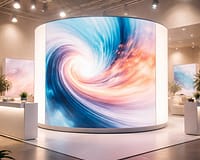
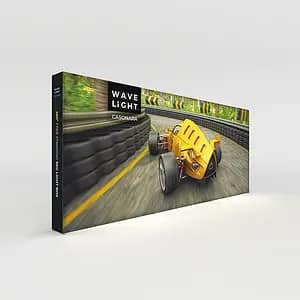
From a visual standpoint, the backlit fabric graphics used with WaveLight® Casonara can transform ordinary images into immersive scenes that seem to glow from within. This added luminosity makes color, contrast, and composition even more critical than in traditional print applications. Brands that succeed with WaveLight® Casonara typically invest in purpose-built graphics, designed specifically for illuminated applications, rather than repurposing standard collateral. Strategically placed messaging, bold branding elements, and a clear visual hierarchy ensure that the most important information is legible from a distance and instantly understood. When combined with smart placement—such as near high-traffic aisles, entrances, or interactive zones—WaveLight® Casonara can significantly increase dwell time and engagement. Ultimately, leveraging this system for maximum brand exposure requires a blend of strong creative, thoughtful spatial planning, and continuous refinement based on how real audiences respond in live environments.
Understanding the broader benefits of WaveLight® Casonara also helps justify investment and guides long-term strategy. The modular nature of the system allows you to reconfigure elements for different footprints, from compact 10×10 booths to larger island exhibits or immersive retail build-outs. This flexibility supports a scalable approach to branding where core assets, such as hero walls, product towers, and branded counters, can be reused and adapted rather than rebuilt from scratch for each activation. The energy-efficient LEDs reduce power consumption compared to older lightbox technologies, which can be especially important at venues with strict electrical limits or high utility costs. Over time, the ability to refresh only the fabric graphics while retaining the hardware provides cost savings and supports agile marketing—campaigns can be updated quickly to align with new product launches, seasonal promotions, or regional messaging needs. When all of these capabilities are aligned with a data-informed event strategy, WaveLight® Casonara becomes more than a visual enhancement; it becomes a core component of a brand’s experiential marketing toolkit, delivering measurable gains in visibility, recall, and perceived quality.
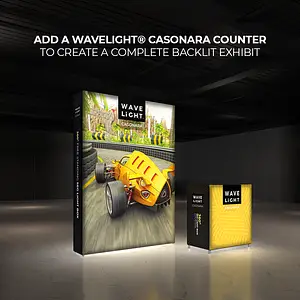
To fully leverage WaveLight® Casonara within a comprehensive marketing program, brands should focus on planning, design, execution, and measurement as an integrated cycle. Planning begins with clearly defined objectives: whether the priority is high-level brand awareness, education about complex products, or direct lead generation, each goal calls for different messaging and booth flows. In smaller spaces, such as 10×10 or 10×20 booths, a single dominant WaveLight® Casonara back wall supported by one or two illuminated counters often offers the best balance between visual impact and functional space. In larger environments, multiple lightboxes can be arranged to create corridors, semi-private meeting nooks, or 360-degree beacons that are visible from multiple aisles. Throughout this process, collaboration between marketing, design, and exhibit fabrication teams ensures that creative concepts are feasible and that technical considerations like power access, assembly time, and transport are accounted for early. During execution, on-site teams should allow ample time for proper assembly, tensioning of graphics, and light testing; this avoids common issues like uneven brightness, fabric wrinkles, or misaligned seams that can diminish perceived quality.
Designing Custom Lightbox Graphics for Maximum Impact
Designing custom lightbox designs for WaveLight® Casonara requires a deliberate approach that recognizes how illumination transforms printed visuals. Unlike standard banners, backlit graphics emphasize every detail, meaning both strengths and flaws become more visible once the LEDs are turned on. To achieve maximum impact, start with a clear visual hierarchy that prioritizes your core message and logo. The brand mark and key headline should typically sit at or slightly above eye level so that they are immediately visible to passersby. Use large, legible typefaces with sufficient contrast against the background to ensure readability from typical aisle distances of 10 to 20 feet. Avoid overcrowding your design with excessive text or small, intricate details that will be lost at a distance; instead, focus on a few strong elements that communicate your value proposition quickly. High-resolution photography or illustrations are critical—low-resolution imagery or heavy compression will show as pixelation or blurriness when illuminated, undermining the premium feel that WaveLight® Casonara can deliver.
Color strategy is especially important for backlit applications. LEDs tend to make bright colors appear even more vivid, while subtle gradients and very dark tones can behave differently than they do on a standard monitor. Many brands find that darker backgrounds with strategic highlights create a dramatic, high-contrast effect that enhances depth and visibility in busy environments. When planning your color palette, request or conduct backlit proofing whenever possible to see how your specific hues reproduce under LED illumination. This is particularly important for brands with strict color standards, as minor shifts can affect perceived consistency across physical and digital touchpoints. Consider how different sides of a 360 backlit Exhibition Signage configuration will be viewed: one panel might face a main aisle and should carry bold, attention-grabbing content, while adjacent panels might be better suited for supporting messages, product features, or calls to action.
Another crucial dimension of design is how your graphics interact with space and audience movement. Think about sightlines from various directions and distances—what will someone see first when approaching from the left, right, or directly down an aisle? For island or peninsula booths, each face of your WaveLight® Casonara structures should serve a distinct purpose while still feeling cohesive as part of a unified design system. Use consistent visual elements, such as recurring patterns, color bands, or iconography, to tie panels together, even when the content differs. Incorporate visual cues—arrows, pathways, or gradient flows—that subtly guide visitors toward key interaction zones, such as demo areas or consultation counters. Finally, leave adequate “breathing room” within the layout by maintaining margins and negative space; crowded compositions tend to look chaotic when illuminated, while clean, spacious designs project confidence and professionalism.
- Use high-resolution, backlit-optimized images to avoid pixelation and ensure crisp, professional visuals on WaveLight® Casonara displays.
- Maintain a clear visual hierarchy with a dominant headline and logo placed at typical eye level for quick recognition from a distance.
- Select color palettes tested for LED backlighting, ensuring accurate brand color reproduction and strong contrast in event lighting conditions.
- Design each visible panel with its viewing angle and audience approach paths in mind, especially for 360 backlit Exhibition Signage configurations.
- Integrate concise calls to action, such as QR codes, short URLs, or simple prompts, to convert attention into measurable engagement.
Using 360 Backlit Exhibition Signage to Dominate Event Spaces
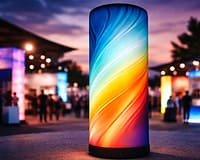
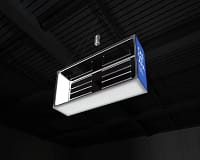
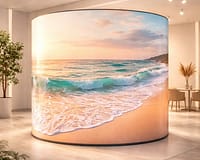
Using WaveLight® Casonara as 360 backlit Exhibition Signage enables brands to dominate event spaces by creating multi-angle visibility and immersive environments that are difficult to ignore. Traditional booth designs often focus on a single front-facing backdrop, which can limit exposure to attendees approaching from side aisles or the back of the island. By contrast, strategically arranged WaveLight® Casonara towers, walls, and counters allow you to present illuminated branding on all sides, turning your space into a beacon that draws traffic from every direction. To achieve this, consider how your booth footprint interacts with local traffic patterns—study the floor plan to identify main aisles, crosswalks, and congregation points near registration, food courts, or session entrances. Place the tallest, most visually striking elements along these high-visibility lines so that your brand becomes part of the attendee’s visual landscape long before they reach your location. Once nearby, additional, slightly lower-height structures can take over, presenting more detailed information and clear pathways into the booth.
In practice, a 360 backlit Exhibition Signage strategy with WaveLight® Casonara often involves layering different types of structures to guide the attendee journey. For instance, illuminated towers or columns can act as vertical anchors visible from across the hall, showcasing key brand messages or iconic imagery. These can be paired with perimeter lightbox walls that frame the space and create a sense of environment, whether that is a high-tech, minimalist aesthetic or a warm, hospitality-driven atmosphere. Closer to the center of the booth, lower-height counters or kiosks can combine backlit branding with functional surfaces for demos, product displays, or lead capture stations. This vertical and horizontal layering transforms your presence from a flat backdrop into a three-dimensional experience that remains visually compelling regardless of where an attendee stands. Because WaveLight® Casonara Lightbox systems are lightweight and modular, you can experiment with different configurations from show to show, refining your layout based on which areas generate the most traffic and engagement.
Domination of an event space is not only about being seen; it is also about controlling how your brand is perceived. Bright, evenly lit graphics signal professionalism, investment, and confidence, which can elevate your status relative to neighboring exhibitors that rely on dimmer or more cluttered presentations. To reinforce this perception, maintain consistency across all illuminated elements by using aligned color schemes, typography, and graphic styles. Avoid mixing too many disparate visual themes, which can dilute impact and confuse viewers. Instead, treat your 360 backlit Exhibition Signage as a cohesive ecosystem, where every panel plays a specific role—some introduce, some explain, some invite action—but all clearly belong to the same brand. Supporting elements such as flooring, furniture, and digital displays should complement the lightboxes rather than compete with them. When done well, WaveLight® Casonara helps transform your booth from a simple rented space into a branded environment that dominates attendee memory long after the event concludes.
Integrating WaveLight® Casonara into a Cohesive Brand Experience
Integrating WaveLight® Casonara into a cohesive brand experience means treating illuminated displays as an integral part of your environment, not as isolated visual features. When attendees enter your space, they should immediately sense a unified narrative formed by the interplay of light, graphics, architecture, and interactive elements. Start by defining the primary story you want the environment to tell—whether it is about innovation, trust, sustainability, or customer-centric solutions—and ensure that your WaveLight® Casonara graphics reinforce this theme at every touchpoint. Front-facing panels might carry your overarching brand promise and high-level imagery, while interior panels can dive into specific product benefits, case studies, or testimonials. Align these messages with other components of your booth, such as digital screens, printed literature, and staff talking points, so that visitors hear and see a consistent message regardless of how they engage.
Physical layout plays a major role in creating a cohesive experience. Use WaveLight® Casonara walls and towers to subtly structure the space into zones that correspond with different stages of the customer journey: awareness, consideration, and decision. For example, bright, high-impact lightboxes near the aisle serve as attraction points to pull people in. Once inside, more detailed panels can educate visitors through infographics, process diagrams, or curated product visuals. Deeper in the booth, semi-enclosed areas framed by lightboxes can provide quieter spaces for consultations and in-depth demonstrations, using targeted messages tailored to qualified prospects. Throughout these zones, ensure that transitions feel intentional rather than abrupt; repeating visual motifs, consistent color blocking, or a continuous photographic storyline can guide the eye and help attendees intuitively understand where they are within the journey.
To extend the brand experience beyond the physical environment, integrate digital and interactive components directly into or adjacent to your WaveLight® Casonara displays. QR codes, NFC tags, and short URLs placed in logical, unobtrusive positions on illuminated panels invite visitors to access additional content—such as product specs, case study videos, or promotional offers—on their own devices. This not only enhances engagement onsite but also creates a bridge for post-event nurturing. Social elements can further amplify your reach: design specific sections of your lightbox environment as “Instagrammable” backdrops, clearly featuring your event hashtag and social handles. When visitors take photos in front of these striking, well-lit scenes, they effectively broadcast your brand to their networks, multiplying the value of your physical investment. By weaving WaveLight® Casonara into every layer of the experience—from wayfinding and storytelling to interaction and follow-up—you transform illuminated hardware into a powerful engine for coherent, memorable brand building.
Finally, to truly maximize the impact of WaveLight® Casonara within a cohesive brand experience, prioritize continuous improvement informed by data and feedback. Before the event, establish specific goals and metrics for your illuminated display solutions, such as target booth traffic, engagement time within certain zones, or digital conversions originating from QR codes on your lightboxes. During the event, observe how attendees move through the space and interact with different panels: which graphics consistently draw people in, where do they pause, and where do they lose interest? You can supplement observation with tools such as badge scanners, lead capture forms linked to specific stations, or heat-mapping technologies offered by some venues. Afterward, review these findings alongside overall event outcomes to identify patterns. Perhaps a simplified, high-contrast graphic on one tower generated more photos and social tags than more complex panels, or a certain side panel led to more QR code scans. Use these insights to refine both design and layout for future shows. Over multiple activations, this data-driven approach will sharpen your understanding of what works for your audience, ensuring that WaveLight® Casonara continues to evolve from an eye-catching feature into a consistently high-performing asset that underpins your broader experiential marketing strategy.