The Future of Trade Shows: Illuminated by Innovation
The future of trade shows is bright—literally—thanks to rapid advancements in lighting and display technologies that are transforming how brands present themselves and engage with attendees. Modern exhibitors recognize that visual impact is often the first and most powerful point of contact on a bustling show floor, and illuminated solutions are becoming essential tools for standing out in a crowded environment. Among these innovations, the WaveLight Casonara Lightbox has emerged as a standout option. This lightbox system delivers even, brilliant illumination across graphics, ensuring that brand visuals remain vivid and readable from multiple angles. Its easy setup and modular design make it a favorite for exhibitors who need both efficiency and impact, especially when moving between multiple events or venues with tight installation windows.
Beyond individual products, broader trends in trade show lighting are reshaping exhibit design strategies. LED lighting continues to dominate due to its energy efficiency, long lifespan, and versatility. Exhibitors can choose from a wide spectrum of colors and brightness levels, enabling them to create dynamic atmospheres tailored to their brand identity and audience. Interactive lighting is also gaining traction, integrating motion sensors or touch-responsive elements that invite visitors to engage directly with the booth environment. This kind of interactivity not only enhances the attendee experience but also encourages longer dwell times, improving lead generation opportunities. At the same time, eco-friendly lighting solutions are moving from optional to expected, as exhibitors and event organizers place greater emphasis on sustainability and reducing carbon footprints.
Illuminated display solutions such as backlit displays and custom lightboxes are now central to high-impact trade show strategies. Backlit displays use LED panels behind printed graphics to make imagery appear more vibrant and three-dimensional, grabbing attention even from a distance. Custom lightbox designs allow brands to tailor dimensions, shapes, and configurations to fit specific layouts and creative concepts, from towering vertical columns to expansive wall-to-wall features. In addition, 360 backlit exhibition signage extends visibility in all directions, ensuring that messaging is seen by attendees approaching from any angle. Together, these technologies underscore a larger shift in the trade show world: a move toward immersive, technology-driven environments that fuse creativity and innovation to deliver memorable brand experiences.
The future of trade show lighting and displays is being shaped by a powerful combination of technological advancement and creative strategy. Exhibitors are no longer limited to basic overhead fixtures or simple printed banners; instead, they are leveraging sophisticated illuminated solutions to transform their booths into immersive brand experiences. One of the most notable innovations in this space is the WaveLight Casonara Lightbox, which offers evenly diffused illumination that makes graphics appear crisp, vibrant, and impossible to overlook. Its user-friendly framework and quick assembly design allow exhibitors to deploy visually stunning backwalls, towers, and counters with minimal setup time, an advantage that is particularly valuable in fast-paced event environments. The ability to easily swap graphics also supports agile marketing campaigns, enabling brands to adapt messaging for different shows or audiences without replacing the underlying hardware.
Lighting trends within trade show environments reflect broader shifts in design and sustainability. LEDs have become the standard choice because they deliver high brightness while consuming significantly less energy than traditional lighting. This cost-effective, eco-conscious approach appeals to exhibitors looking to reduce operational expenses and align with green initiatives. Interactive lighting is another emerging trend, integrating sensors and control systems that react to attendee movement or gestures. For instance, a display might brighten, change color, or animate when a visitor steps closer, creating a sense of personalized engagement that encourages interaction and conversation. Such features can be paired with digital content, touchscreens, and augmented reality components to craft cohesive, multisensory journeys through a booth space.
Illuminated display solutions also support stronger brand storytelling. Backlit displays, for example, are ideal for highlighting hero products, key messages, or lifestyle imagery that conveys brand values at a glance. Custom lightboxes can be engineered to fit unique floorplans, low ceilings, or irregular exhibit spaces, ensuring that every square foot works hard to attract and inform. Meanwhile, 360 backlit signage is designed to maximize visibility by ensuring that key messages remain readable from every direction on a busy show floor. This is especially important in high-traffic corridors or island booths where attendees may approach from multiple angles. By combining these lighting and display innovations, exhibitors can create an environment that not only captures attention but also communicates professionalism, innovation, and a clear brand identity. As trade shows continue to evolve, the integration of smart lighting, interactive features, and sustainable design will remain central to building memorable and effective exhibit experiences.
WaveLight Casonara Lightbox and Illuminated Display Solutions
The WaveLight Casonara Lightbox is at the forefront of modern trade show presentation, redefining how exhibitors leverage lighting to capture attention and communicate their message. Unlike traditional displays that often rely on inconsistent external light sources, this system incorporates LED illumination within the structure itself, ensuring that graphics are evenly lit from edge to edge. The result is a clean, high-impact visual that remains sharp under varying ambient conditions. Its fabric graphics are typically printed with dye-sublimation techniques, which allow for rich colors and fine details that stand out once backlit. Because the lightbox framework is lightweight and modular, exhibitors can configure different shapes and heights, from sleek backwalls to tall columns and freestanding towers that draw the eye across the show floor.
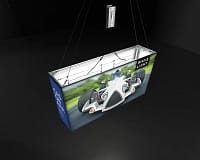
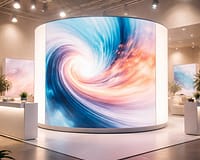
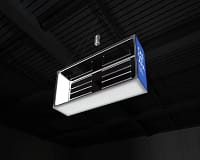
Illuminated display solutions extend far beyond a single product category. Backlit displays, for instance, have become integral to trade show environments where competition for attention is intense. By placing LED panels or light strips behind printed graphics, these displays provide a level of contrast and vibrancy that traditional front-lit banners cannot match. They can be used to frame key messaging, introduce new products, or define focal points within a booth. Custom lightboxes take this concept further by tailoring dimensions, contours, and mounting options to suit specific branding strategies. Exhibitors might design curved walls that envelop visitors, suspended ceiling features that create a canopy of light, or integrated counters that combine storage with illuminated branding surfaces.
Illuminated solutions also support strategic traffic flow and wayfinding. 360 backlit exhibition signage is particularly effective in open or island configurations, where attendees approach from multiple directions. By ensuring that logos, taglines, and directional cues are visible from all sides, exhibitors can improve booth discoverability and reduce missed opportunities. Technological enhancements like dimming controls, remote-managed color changes, and programmable lighting sequences allow for tailoring the booth’s look throughout the day—perhaps using brighter, more energetic lighting during peak hours and softer tones during networking sessions. When used thoughtfully, the WaveLight Casonara Lightbox and related illuminated solutions help exhibitors move beyond static displays and into dynamic, experiential environments that invite visitors to explore, engage, and remember the brand long after the event concludes.
- Leverage WaveLight Casonara Lightboxes to create evenly illuminated, high-impact graphics that stand out on crowded trade show floors.
- Incorporate LED-based backlit displays to enhance color vibrancy, improve readability, and draw attention from a distance.
- Use 360 backlit exhibition signage to maximize brand visibility and ensure messaging is seen from all directions in open booth layouts.
- Adopt interactive and motion-responsive lighting to increase engagement and encourage visitors to spend more time in your booth.
- Prioritize eco-friendly lighting solutions, such as energy-efficient LEDs, to support sustainability goals and reduce operating costs.
Trade Show Lighting Trends and Custom Lightbox Designs
Trade show lighting trends are evolving rapidly as exhibitors seek more effective ways to attract, inform, and engage attendees. LED lighting sits at the core of these trends, offering a highly adaptable solution that balances efficiency with performance. LEDs consume less energy and generate less heat than traditional bulbs, which is crucial in dense exhibit halls where temperature and power usage must be carefully managed. Their compact size also enables creative placement within structures, signage, and product displays, making it possible to highlight key areas without intrusive fixtures. Exhibitors are using tunable white and RGB LEDs to shift color temperatures or introduce brand-specific hues that reinforce visual identity. By synchronizing light tones with graphics and flooring, they create cohesive environments that feel intentional rather than pieced together.
Interactive lighting represents another significant trend. Motion sensors, touch interfaces, and programmable controllers can trigger lighting changes based on visitor behavior. For example, stepping into a product demonstration zone might activate a brighter, more focused light setting, while a hand gesture near a display can cause accent lights to pulse or shift colors. These subtle yet memorable effects encourage attendees to explore, turning passive observation into active participation. When combined with audiovisual elements and digital displays, interactive lighting helps to construct immersive storytelling experiences. Exhibitors can guide visitors along a narrative path, using different lighting scenes to mark transitions between product categories or stages in a demo.
Custom lightbox designs bring these lighting trends to life in tangible structures. Instead of relying on standard rectangular frames, brands can commission shapes and configurations that align with their aesthetic and functional goals. This might include tall, slim towers that act as beacons on a crowded floor, curved walls that create semi-private lounge areas, or integrated shelving units that backlight products as well as graphics. Customization extends to the artwork itself, with graphics designed specifically to take advantage of backlighting—using gradients, bold imagery, and strategic negative space to create depth and contrast. Many exhibitors also adopt modular systems that can be reconfigured from one show to another, protecting their investment and supporting changing campaign needs. As sustainability becomes more important, reusable custom lightbox frameworks with easily updated graphics help reduce waste. Collectively, these trends underscore a shift toward smarter, more engaging, and more responsible use of lighting in trade show environments.
360 Backlit Exhibition Signage and the Bright Future of Trade Shows
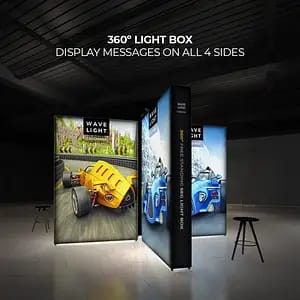
360 backlit exhibition signage is redefining visibility and presence in contemporary trade show environments. Traditional flat signage often suffers from limited sightlines; once an attendee approaches from the side or rear, the message is lost. By contrast, 360 backlit systems are engineered to present illuminated graphics on all visible surfaces, ensuring continuous exposure as visitors move around the space. This approach is particularly powerful for island booths and central installations where traffic originates from multiple directions. Exhibitors can use this type of signage to display core brand elements—logos, taglines, and anchor messages—that need to be recognizable at a glance. Because the signage is backlit, these elements remain bright and legible despite the competing visual noise of neighboring exhibits.
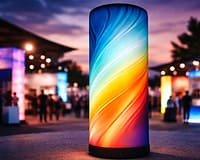
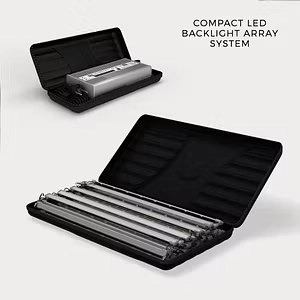
Beyond pure visibility, 360 backlit signage supports strategic zoning within a booth. For example, a tall illuminated column at the center of a space can function as both a visual landmark and an orientation point, helping staff direct visitors toward specific demo areas, meeting zones, or product displays. When paired with coordinated floor graphics and directional lighting, it contributes to a seamless flow that feels intuitive to navigate. The technology behind these structures often incorporates lightweight aluminum frames and tension fabric graphics, which are easy to transport, assemble, and update. LED modules are arranged to provide uniform brightness, avoiding the hot spots and shadows that can undermine a professional appearance. Many systems are also compatible with dimmers and programmable controllers, allowing exhibitors to adjust intensity and color temperature to suit different times of day or event themes.
Looking ahead, the integration of 360 backlit signage with other digital and interactive technologies will continue to shape the future of trade shows. There is growing potential for combining backlit surfaces with projection mapping, transparent screens, or embedded sensors that react to attendee proximity. These hybrids can deliver personalized content or dynamic visuals that evolve throughout the event. At the same time, sustainability considerations remain critical. Energy-efficient LEDs, durable reusable frames, and recyclable fabrics are helping reduce environmental impact while still providing high-impact visuals. Ultimately, the convergence of 360 backlit signage, advanced lightbox systems, and interactive lighting trends signals a broader transformation in how trade show environments are conceived. Instead of static booths, exhibitors are building living, illuminated experiences that communicate brand stories in compelling, memorable ways, ensuring that the future of trade shows is not only bright but also more engaging and efficient than ever before.
The integration of lighting innovation, custom display engineering, and thoughtful exhibit strategy is reshaping what success looks like at trade shows. Exhibitors no longer rely solely on size or location to draw attention; instead, they use illumination, contrast, and motion to create dynamic environments that stand out even in dense, competitive halls. Lighting is now treated as a strategic design layer, on par with architecture, graphics, and digital content. For instance, a brand can use bright, cool-toned LEDs at the perimeter of its booth to attract passersby, then transition to warmer, more focused lighting in meeting areas to encourage conversation and comfort. This deliberate use of light supports both marketing objectives and attendee experience, guiding visitors from initial interest to deeper engagement.
Illuminated technologies such as WaveLight Casonara Lightboxes, backlit walls, and 360 signage also play a critical role in storytelling. Well-lit graphics can highlight product benefits, showcase real-world applications, or celebrate customer success narratives, all while maintaining readability across varying sightlines. When combined with interactive elements—such as touchscreens synchronized with lighting effects—these displays become platforms for two-way communication rather than static advertisements. This shift aligns with broader trends in experiential marketing, where audiences expect to participate rather than simply observe. Exhibitors who invest in cohesive lighting and display strategies are therefore better positioned to create memorable brand moments that extend beyond the show floor through social media sharing, photos, and word-of-mouth.
From an operational perspective, the move toward LED-based, modular, and reusable illuminated systems supports both efficiency and sustainability. Lightweight frames and tension fabric graphics reduce shipping costs and setup time, while the long life span of LEDs helps decrease maintenance and replacement needs. Many solutions allow for easy graphic swaps, meaning that a single hardware investment can serve multiple campaigns or product launches over several seasons. As event organizers and exhibitors place increasing emphasis on environmental responsibility, these characteristics are becoming more than just advantages—they are often requirements. Taken together, these developments suggest that the future of trade shows will be defined by environments that are brighter, smarter, more sustainable, and more interactive. Brands that harness illuminated technologies thoughtfully will be best positioned to cut through the noise, connect with their audiences, and translate in-person engagement into lasting business relationships.